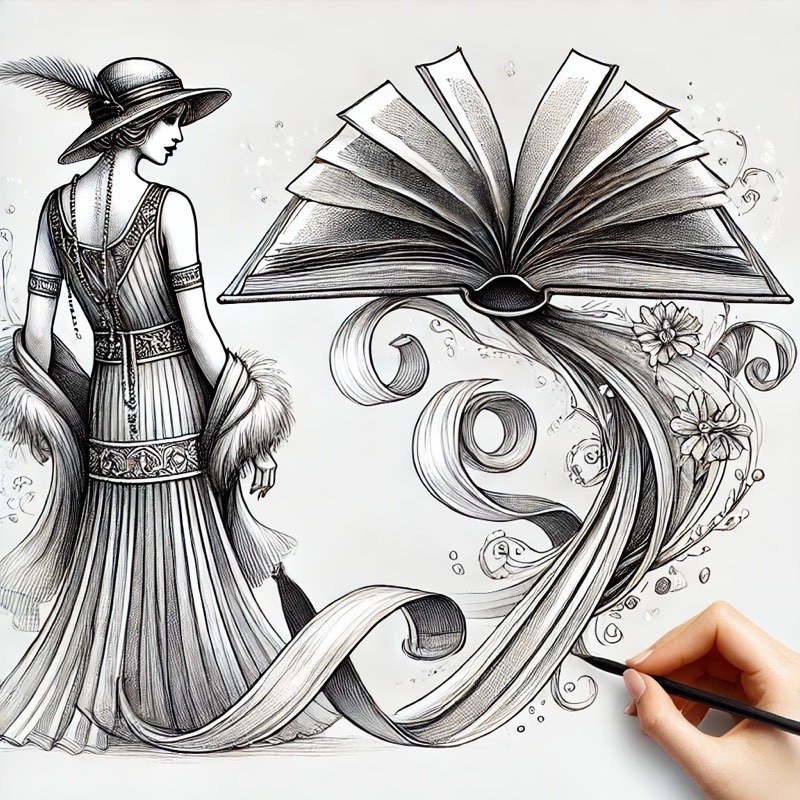
• Il Natale è una stagione che porta con sé un’atmosfera unica: l’aria frizzante, il profumo di abete, le luci calde e, per noi amanti della lettura, la promessa di storie capaci di scaldare l’anima. I libri dedicati al Natale ci trasportano in mondi incantati, dove la neve sembra cadere più soffice e i cuori si aprono a sogni e speranze. Ma cosa rende così speciale la magia natalizia raccontata nelle pagine di un romanzo?

    Il potere della nostalgia

    Molti dei racconti natalizi più amati sono intrisi di nostalgia. Prendiamo “Canto di Natale” di Charles Dickens: un’opera che, pur essendo scritta nel 1843, continua a commuovere lettori di ogni generazione. Il viaggio di Ebenezer Scrooge attraverso i Natali passati, presenti e futuri ci ricorda quanto sia importante non perdere di vista ciò che conta davvero: l’amore, la generosità e la capacità di meravigliarsi.

    Ambientazioni incantate

    Un elemento che non manca mai nei libri sul Natale è l’ambientazione magica. Neve che scricchiola sotto i piedi, caminetti accesi e piazze illuminate creano il palcoscenico perfetto per storie romantiche e fiabesche. Romanzi come “Let it Snow” di John Green o “Un bacio sotto la neve” di Karen Swan ci immergono in luoghi da sogno, regalandoci un’esperienza sensoriale che va oltre le parole.

    Personaggi che scaldano il cuore

    Il Natale è anche la festa dei personaggi che crescono e si trasformano. Pensiamo alla piccola Clara de “Lo Schiaccianoci”, che vive un’avventura tra soldatini e re topi, o ai protagonisti delle commedie romantiche natalizie, che trovano l’amore sotto una spruzzata di neve e magia. Questi personaggi ci fanno credere che, almeno a Natale, tutto sia possibile.

    Le tradizioni che uniscono

    Molti libri natalizi ci invitano a riscoprire le tradizioni, sia quelle universali che quelle personali. In “Hogwarts sotto la neve” (la raccolta di capitoli natalizi della saga di Harry Potter), J.K. Rowling ci ricorda quanto siano speciali i pranzi festivi, i regali fatti col cuore e la gioia di stare insieme. Leggere di tradizioni diverse dalle nostre può ispirarci a crearne di nuove, da condividere con le persone che amiamo.

    Un momento per riflettere

    Infine, i racconti di Natale ci danno il tempo di riflettere su ciò che significa questa festa. È un periodo di pausa, di bilanci e di nuovi inizi, e i libri ci offrono una lente attraverso cui guardare il nostro mondo con occhi nuovi. Da letture classiche come “Piccole Donne” a racconti più moderni, il Natale diventa un simbolo di speranza e rinnovamento.

    Consigli di lettura per il tuo Natale

    Se quest’anno vuoi vivere a pieno la magia natalizia, ecco qualche consiglio di lettura:

    • “Un regalo sotto l’albero” di Jenny Hale: una dolce storia d’amore.

    • “Il Natale di Poirot” di Agatha Christie: un giallo natalizio da brivido.

    • “Il dono della notte di Natale” di Grazia Deledda: una perla della nostra letteratura.

    • “Feste di Natale” di Truman Capote: una raccolta di racconti che ti commuoverà.

    Questo Natale, lasciati trasportare dalla magia dei libri. Siediti accanto a un albero illuminato, versa una tazza di cioccolata calda e immergiti in una storia che ti farà sentire il calore del Natale, anche nelle giornate più fredde.

    E tu? Qual è il libro natalizio che porteresti sempre nel cuore?

  • A Century of Magic and Solitude: Exploring Cien Años de Soledad by Gabriel García Márquez

    Few novels have left such an indelible mark on literature as Gabriel García Márquez’s Cien Años de Soledad (One Hundred Years of Solitude). First published in 1967, this masterpiece of magical realism takes readers on a whirlwind journey through the fictional town of Macondo, intertwining the extraordinary with the everyday. With its rich tapestry of characters and fantastical events, it’s no wonder this novel is considered one of the most significant works of the 20th century.

    The Birth of Macondo: A World Like No Other

    At the heart of Cien Años de Soledad is the town of Macondo, a place as much a character as any of its inhabitants. Founded by José Arcadio Buendía and his wife, Úrsula Iguarán, Macondo is depicted as an isolated utopia, born out of curiosity and innocence. However, as the Buendía family grows over the course of a century, so too does the town’s exposure to the outside world, bringing with it both progress and ruin.

    García Márquez draws readers into a vibrant universe where reality and fantasy blur seamlessly. In Macondo, the ordinary becomes extraordinary: rain showers last for years, characters live for over a century, and ghostly apparitions casually wander through the town. This unique blend of myth and reality is the essence of magical realism, a genre that García Márquez helped popularize, making the impossible feel plausible and utterly captivating.

    The Buendía Family: A Cycle of History and Fate

    The narrative spans seven generations of the Buendía family, who are cursed to repeat the same mistakes in a seemingly endless cycle of love, betrayal, and tragedy. Each member of the family is burdened by their namesake, as if their destinies were preordained from birth. The repetition of names—Arcadio, Aureliano, José—serves as a metaphor for history’s tendency to repeat itself, turning the Buendía family tree into a labyrinth of intertwined fates.

    Despite the sprawling timeline, García Márquez masterfully maintains the reader’s engagement by weaving together personal stories with larger historical and political themes. From civil wars to foreign exploitation, Macondo’s history reflects the turbulent past of Latin America, where colonialism, dictatorships, and revolutions have left their marks.

    The Weight of Solitude

    At its core, Cien Años de Soledad is a meditation on solitude. Each character, in their own way, grapples with isolation, whether it be physical, emotional, or existential. The title itself hints at the pervasive sense of loneliness that haunts the Buendía family, despite their numerous romantic entanglements and social connections.

    The theme of solitude is perhaps most poignantly embodied by Colonel Aureliano Buendía, who, after fighting in countless wars, finds himself more alone than ever, creating little gold fishes in a futile attempt to fill the void within him. García Márquez uses solitude as both a literal and metaphorical force, reflecting on how, despite the noise and chaos of life, we all face moments of profound isolation.

    A Masterpiece of Storytelling

    What truly sets Cien Años de Soledad apart is García Márquez’s unparalleled storytelling. His prose is lush, lyrical, and often tinged with humor, drawing readers into a dreamlike state where the boundaries between reality and fantasy dissolve. The novel’s non-linear structure, filled with vivid flashbacks and digressions, invites readers to piece together the puzzle of Macondo and the Buendía lineage.

    The novel’s ending is as enigmatic and powerful as its beginning, bringing the story full circle in a poetic closure that leaves readers reflecting on the inevitable cycles of history, love, and loss. García Márquez’s ability to blend profound philosophical themes with enchanting storytelling is what cements

  • The Intermittency of Death by José Saramago: A Bold Reflection on Immortality

    Portuguese author José Saramago, who won the Nobel Prize for Literature in 1998, has always challenged narrative conventions and pushed readers to contemplate deep existential questions. The Intermittency of Death (As Intermitências da Morte), published in 2005, is no exception. It delves into the intertwined forces of life and death with irreverence and wit.

    The Premise: A World Without Death

    The story starts with a provocative premise: what would happen if, one day, death simply stopped doing her job? In an unnamed country, at the stroke of midnight on New Year’s Day, people stop dying. No matter how severe their conditions, nobody can take their last breath. At first, this newfound immortality is welcomed with joy, but soon the darker side of a world where death is suspended comes to light.

    A Novel that Challenges Society

    Using his signature style, characterized by long sentences, minimal punctuation, and a subtle irony, Saramago explores the social, political, and economic consequences of a world without death. Hospitals fill up with terminal patients who cannot pass away, nursing homes overflow with the elderly, and even the Church faces a crisis, as the concept of eternal life loses its significance.

    The novel delves into how institutions struggle to adapt to the new reality. Insurance companies go bankrupt, the government grapples with overpopulation, and even organized crime tries to profit from the paradoxical situation. With sharp satire, Saramago highlights the hypocrisy of society, forcing readers to reflect on how deeply our social structures rely on the inevitability of death.

    When Death Returns (and Becomes Humanized)

    The narrative takes a turn when, suddenly, death decides to resume her work, but with one small change: she will now send a letter to those about to die, giving them one week’s notice. This change throws everyone into chaos as people desperately try to escape the inevitable, revealing how unprepared we are to face our own mortality.

    However, the true twist comes when death herself becomes a character, taking on a human form and facing dilemmas that seem almost earthly. In a more intimate and reflective second half of the novel, Saramago offers readers a surprising love story between death and a musician—an unexpected relationship that, paradoxically, explores the beauty and fragility of life.

    Final Thoughts

    The Intermittency of Death is a novel that does more than entertain; it raises profound questions about what it means to be human. In a world where we often try to ignore or defy death, Saramago reminds us that it is an intrinsic part of our existence. His storytelling challenges us to confront our fear of the unknown and to reflect on how much we value the time we have.

    Saramago’s ironic tone and fluid writing balance the weight of the subject matter, making the book an engaging yet thought-provoking read. The Intermittency of Death is highly recommended for those looking for a novel that masterfully blends philosophy, satire, and a dose of humanity, pushing us to ponder the deeper meaning of life and death.

  • Today I would like to talk you about the Queen of Mystery: Agatha Christie.

    This brilliant mind has not only given life to countless masterpieces, creating immortal characters such as the superb Poirot and the cunning Miss Marple, but has also been able to make her life itself a real intrigue worthy of her works.

    Here’s a list of 10 little curiosities you might not know about her:

    1)In 1926, the 36-year-old Agatha … disappeared. The whole of England set out in search of the English writer, whose husband had just filed for divorce. Christie was found in a state of confusion near the town of Harrogate. In the Hotel where she stayed for these 10 days she registered with the name … of her husband’s lover.

    2) Agatha Christie is the most translated writer in the world, second only to… Shakespeare.

    3) Her second husband was 14 years younger.

    4) The 1920 tale “Poirot a Styles Court” was the result of a…bet made with her sister Madge (who she considered Agatha devoid of great imagination and writing skills).

    5) She published several romance novels on the pseudonym Mary Westmacott.

    6) In 1890 in addition to the birth of the future most famous mystery writer in the world, other important events also happened: in Europe on May 1st Labor Day is celebrated for the first time, Wilde publishes the famous “The Portrait of Dorian Gray”, born Stan Laurel, future companion of Olio in the comic duo and two great artists die: Van Gogh and Carlo Collodi.

    7)Her real last name was Miller: Christie was the surname of her first husband, Archibald.

    8) Three years after her death, a film entitled “The Secret of Agatha Christie” dedicated to the life of the English writer was released in cinemas.

    9) The character of Hercule Poirot is so famous that there is a stamp with his image depicted.

    10) Many of the film and television adaptations of Agatha’s works were not… appreciated by the author.

    For further curiosity I advise you to read her biography entitled “My Life” and published posthumously (although in this one she doesn’t mention her disappearance in 1926).

  • When I first read this title, shivers ran down my spine.

    How could anyone even think of such a cruel thing, I wondered? Or especially writing a book about it!

    Then I started reading it, and page after page, I felt close to that poor child, the author herself, who suffers from suffocating and psychological pressure from a mother who, instead of loving and respecting her, uses her, exhausts her, and deprives her of the only thing a child should have by birthright: her own childhood. And so Jennette, yes, the baby star of Nickelodeon, always smiling and cute on screen, in reality lived a chilling existence crushed by the only person who should have been her friend, playmate, but above all, her mother.

    I recommend this read because while it leaves a bitter taste in your mouth, on the other hand, it makes you hope for a better world because although this book is totally disturbing, in the end, the emotional redemption of the protagonist leaves a glimmer of light in this sad and toxic story.

    Because just like polished Hollywood teaches us: not everything that glitters is gold!

    Jennette McCurdy, best known as an actress, has also showcased her talent as a writer. In her autobiographical memoir “I’m Glad My Mom Died”, she candidly shares her experiences with grief and loss. McCurdy also contributed articles and essays to publications, demonstrating her versatility and creativity beyond acting.